Introduction
Welcome to the official Trezor.io/start setup guide. This guide will help you set up your Trezor hardware wallet step by step. With more than 2000 words of detailed explanation, you will gain a complete understanding of how to initialize your wallet, back up your recovery seed, and secure your digital assets.
Step 1: Unboxing and Connecting
Begin by unboxing your Trezor device. Inside, you will find the Trezor hardware wallet, a USB cable, instruction cards, and recovery seed cards. Connect your Trezor device to your computer using the provided USB cable. Once connected, open your browser and go to Trezor.io/start. This official link will redirect you to the setup portal where you can download the Trezor Suite.
Step 2: Download Trezor Suite
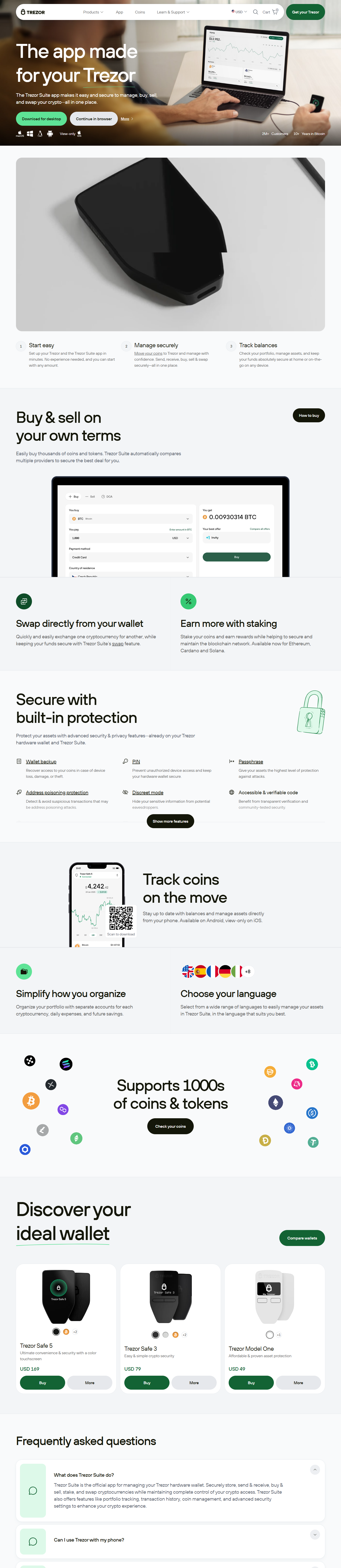
Trezor Suite is the official desktop application that allows you to manage your crypto assets. It is compatible with Windows, macOS, and Linux. For mobile users, Trezor Suite Lite is available. Download and install the latest version directly from the official site to avoid phishing risks.
Step 3: Firmware Update
On your first connection, the device may ask for a firmware update. Follow the on-screen instructions to update the firmware securely. This ensures your device is running the latest version with improved security features.
Step 4: Create a New Wallet
Once the firmware is installed, you will be prompted to create a new wallet. The device will generate a recovery seed. This seed is the most important backup of your crypto wallet. Write it down on the recovery seed cards provided in your box. Never share this seed with anyone and never store it digitally.
Step 5: Backup & Security
After writing down your seed, confirm it by entering the words back into the Trezor device. Enable additional security features such as PIN and passphrase for maximum protection. The passphrase acts as an extra layer of encryption on top of your seed, giving you advanced protection.
Step 6: Managing Your Crypto
With your wallet initialized and secured, you can now use Trezor Suite to send, receive, and manage your cryptocurrencies. The application supports Bitcoin, Ethereum, Litecoin, and many other altcoins. You can also connect third-party wallets like MetaMask for DeFi interactions using Trezor as a hardware security layer.
Security Best Practices
- Always download software from official sources.
- Never share your recovery seed.
- Regularly update your Trezor Suite and firmware.
- Enable a strong PIN and use a passphrase.
- Keep your recovery seed stored offline in a secure location.
Conclusion
By following this official Trezor.io/start setup guide, you ensure your crypto assets remain safe and accessible only to you. The Trezor hardware wallet is one of the most trusted tools in the industry, giving you peace of mind when managing your digital wealth. Stay secure, stay updated, and always rely on official resources.